Most wrong-part shipments start the same way. The number was never confirmed. Someone reads a title on a supplier page, orders against it, and a week later a courier hands a technician a module that does not fit: same shape, same colour, one digit different.
After enough of those, you stop trusting titles and start reading the part itself. What follows is the process our technicians run on incoming units, covering what to photograph, how to read a nameplate, how the four major brands number their parts, and the five checks we run before anything is ordered.
Why the same part carries three different numbers
A single component usually has more than one legitimate number attached to it.
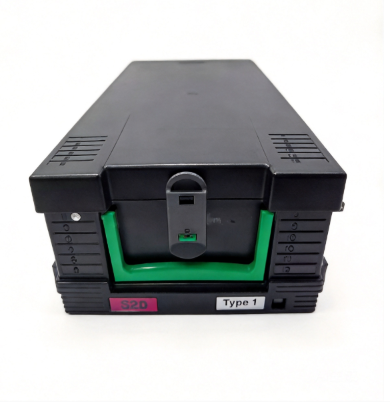
The first is the OEM part number, the one that appears on the OEM's own documentation. The second is the alternative or block form of that same number, because different systems print it differently. NCR writes 445-0756222 on a label and 4450756222 in older catalogues. Diebold prints 49-248085-000C and 49248085000C for the same reject cassette, depending on which era's documentation you are reading. Wincor lists a Cineo recycle module as 1750200435 and 01750200435, where the leading zero is a writing convention rather than a different part. Hyosung runs the same story in reverse: 7430000208 and S7430000208 mean the same CDU10 cassette.
The third is whatever internal code a seller or a repair centre uses on their own shelf.
The practical rule is to normalise the number before you search it. Strip dashes, strip leading zeros, then compare. If you search a normalised number and only one form comes back, that is not a sign the part does not exist. It usually just means the writer used a different convention.
Start with the part in your hand, not the page you found it on
A photograph of a listing proves nothing. A photograph of the unit in front of you proves everything.
What we ask for on every identification case:
- The nameplate or silkscreen, straight on and in focus, filling the frame.
- The connector: shape, pin count, keying. Two versions of the same assembly frequently differ only here.
- The mechanism interface: gear or pulley tooth count, shaft diameter, spring anchor points.
- Cable length and routing, if it is a wired assembly.
- Mounting holes or bracket pattern, with a ruler or tape measure in frame.
- Any revision silkscreen on the board (REV 0A, REV B and similar).
Three of those six take ten seconds, and they eliminate most mismatches before a number is even discussed.
The brand on the part is not always the brand on the machine
This is where experienced buyers still get caught.
A 19-inch SITO service kit for an NCR terminal carries an Elo panel and an FPC (flexible printed circuit) labelled MT90-90C35-140. The ATM brand is NCR, the panel manufacturer is Elo, and the kit has its own NCR number. None of those three facts contradicts the others, and none of them alone tells you the part is correct.
Power supplies are the classic example. A PSU assembly is sold under the ATM brand's number, while the label on the unit itself carries the name of whoever actually built it. The sub-suppliers that build these form factors are a small group, and the same enclosure can come from more than one of them depending on the production batch. So the label tells you who built the unit, and the number tells you which machine and which revision it belongs in. Both are useful. Only one of them is the ordering reference.
What not to read as identity: "Made in", RoHS statements, weight, and generic words like ASSY, KIT or SERVICE PART. None of them distinguish generations.
One digit apart: privacy, region and revision families
Numbers that differ by a single digit are the most expensive kind of mistake, because the wrong part arrives looking right.
Take this worked example from our own sourcing desk, two 19-inch SITO service kits for the same screen family:
- 445-0799053: SITO service kit, 19 inch, without privacy film
- 445-0799054: SITO service kit, 19 inch, with privacy film
Same panel. Same FPC. The difference is one layer of privacy filter, and the part numbers sit next to each other. Order the wrong one and it fits perfectly, but in the wrong environment, where a bank's privacy requirement decides whether the installation passes.
The same pattern shows up in two other places.
Region builds. On Wincor and Diebold Nixdorf V-module and keyboard families, the same physical shape exists in regional builds, with separate numbers for separate language and key-layout configurations. A keyboard that fits is not a keyboard that passes compliance for that market.
Revision suffixes. Trailing letters are generation markers, not decoration. When a part number ends in a letter, that letter usually maps to a specific production revision, and the fitment across generations is not guaranteed even when the assembly looks identical.
Match the number to the brand's system first
Before you search anything, work out which numbering system you are looking at. The four majors differ enough that the shape of a number tells you where to look next.
NCR uses two parallel series in the field. The 445-xxxxxxx block covers components, boards, panels, cables and kits. The 009-xxxxxxx block covers module-level assemblies, so when a customer sends a 009 number for a failed recycler or dispenser module, that is a module assembly, and the repair conversation is different from a 445 component. Both series print with and without dashes.
Diebold Nixdorf numbers come in several blocks depending on era: 49-xxxxxx-000X for parts, 19-xxxxxx-000A on older card reader heads, 00-xxxxxx-000X on older cassette generations. When the dashes are dropped, the number runs as eleven digits plus its suffix letter: 49-248085-000C becomes 49248085000C. Compare normalised, not literally.
Wincor numbers are the ten-digit 1750xxxxxx family, written with or without a leading zero. The Cineo C4060/C4040 recycle module is a good reference, since 1750200435 and 01750200435 are the same item.
Hyosung circulates two forms: ten-digit numbers beginning with 7, and S-prefixed numbers carrying the same digits. The CDU10 cassette family appears both ways.
One more warning, and this one costs people real money. Version-style naming belongs to specific brands. "V-series" and "V5" style version names are Wincor and Diebold Nixdorf terminology, so an NCR keyboard is not a "V5" part, whatever a catalogue page says. When a seller's title mixes one brand's version naming with another brand's number, the title is wrong. From there, assume the description, the photo and the fitment list are wrong too until proven otherwise.
Fits everything? That is the red flag, not the selling point
A listing that claims one part fits NCR, Diebold, Wincor and Hyosung is telling you that nobody checked. Cross-brand substitution is not a thing in this trade. Mounting geometry, connector keying, dispenser protocol and firmware expectations are brand-specific, and often generation-specific inside a single brand.
The other red flags we see regularly:
- A number with an invented suffix. If the manufacturer's own documentation never used that form, the seller made it up.
- One number used for two mutually exclusive descriptions. We have seen the same part number listed as an "English version" and an "Arabic assembly" on the same catalogue page. Both cannot be true.
- A category mismatch. Pages titled "card reader" that show a receipt printer mechanism in the photograph. If the photo does not show the thing the title claims, the number underneath it is not trustworthy either.
- A clean stock rendering instead of the actual unit. Fine for a category page, useless for verification.
The five checks before you order
- Nameplate photograph of the actual unit, not a catalogue image.
- Number normalised and matched to the brand's numbering system.
- Generation and revision clarified, including the region build where the family has one.
- Category sanity check: does the photograph show the component the title names?
- If the number is a service kit, what is inside the kit? A kit number is not a single component.
Run those five and the wrong-part rate drops sharply. Skip them and you are ordering a number, not a part.
What a usable part record looks like
Whether you are stocking or buying, a part is only properly identified when the record holds all of this: the part number and its alternative written form, the brand, the module it belongs to, the machine models it fits, the condition (new, rebuilt, or refurbished), test status, warranty terms, lead time, and how it is packed for transit.
Our own product pages follow that structure, which is why we can answer fitment questions from the number alone in most cases. The brand reference pages are the fastest entry point, since the NCR, Diebold Nixdorf, Wincor and Hyosung hubs each carry the model families and the module breakdown, and the individual part records link back to them.
Frequently asked questions
Q1. Is the number printed on the part always the OEM number?
Not always. Sub-suppliers print their own marks on the assemblies they build, and OEMs print theirs on the packaging, the kit label or the module bracket. When the two disagree, the OEM number on the machine documentation is the ordering reference, and the sub-supplier mark is useful only as a cross-check on who built it.
Q2. My sheet says 445-0756222 and the seller writes 4450756222. Same part?
Yes. Dashes and leading zeros are writing conventions. Normalise both numbers before comparing, and only then decide whether they match.
Q3. Can I use an NCR part on a Diebold machine if the two look identical?
No. Mounting points, connector keying, transport timing and firmware expectations are brand-specific. Even inside one brand, a part that fits a machine two generations older will often not fit the current one.
Q4. What if there is no number printed anywhere on the part?
Then identification moves to physical evidence: photographs of the unit from several angles, connector and mounting dimensions against a ruler, the machine model, and the fault it produced. That is usually enough to narrow a candidate list, after which the number can be confirmed against the model documentation.
Q5. What do the different part conditions mean in practice?
New means unused stock, typically still in OEM packaging. Rebuilt means the assembly has been restored to working condition with replaced wear components and tested. Refurbished usually means cleaned, tested and returned to service without full component replacement. The condition should be stated per line item, not per order, because the same part can be offered in more than one of these states.
Q6. A listing offers two numbers one digit apart. How do I choose?
Look for the differentiator in the name itself: privacy or non-privacy, region build, or revision letter. If the listing does not state it, ask for the nameplate photograph and compare it against the machine requirement.
Q7. Who supplies parts for these four brands?
MicroLinkpro supplies compatible NCR, Diebold Nixdorf, Wincor and Hyosung ATM spare parts from South China, covering current and legacy machine families across a catalogue of 10,000+ SKUs. Modules, transports, boards, cassettes, readers, printers, panels and service kits are all handled the same way: number first, photographs second, confirmation before shipment.
Send us the nameplate, not the catalogue page
If you are holding a part and are not certain of the number, send two photographs: the nameplate and the connector, plus the machine model. Our technicians will read the number, check it against the machine family and confirm fitment before anything leaves the warehouse. That check is free, and it is the cheapest insurance in this trade.
For part-specific references, start from the brand pages: NCR, Diebold Nixdorf, Wincor and Hyosung. For worked examples of where cross-brand substitution fails, see our cross-brand guide to EPP versions, and for reader-side identification the anti-skimming parts reference covers the security hardware that shares the same bezel space.
Parts referenced in this guide
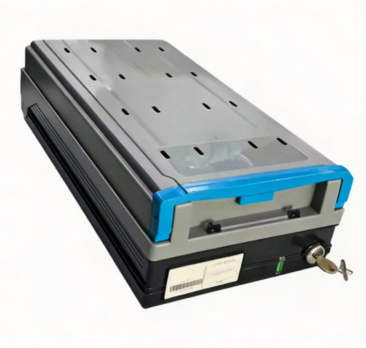
- NCR 445-0756222: S2 currency cassette (the dash and block writing of the same number)
- Diebold 49-248085-000C: Opteva 5500 divert reject cassette (dash-free block form: 49248085000C)
- Wincor 01750200435: Cineo C4060/C4040 recycle module (leading-zero convention)
- Hyosung 7430000208: CDU10 cash cassette (ten-digit and S-prefixed forms)
- Hyosung 7430000255: SF34 note separator (wear component inside a dispenser family)
- NCR 445-0735509 / 009-0028973: EPP keyboard, 5815 class (parallel 445 and 009 series on one assembly)