This is an advanced follow-up to our May 2026 NCR ATM Components Guide. That article covered the 10 most replaced NCR parts at a survey level. This edition goes deeper — 5 highest-failure components, specific part numbers, failure mechanisms at the component level, and replacement strategies drawn from real field service data.
NCR SelfServ ATMs are one of the most widely deployed ATM platforms on the planet. Spanning models 22, 25, 34, 38, 60, 66, 80, and 84, the SelfServ family is the backbone of retail banking automation across 130+ countries. When one of these machines goes down, it doesn’t just inconvenience a customer. A single downed SelfServ 34 in a busy bank lobby can lose hundreds of transactions per day. For service companies maintaining fleets of NCR equipment, knowing which parts fail most often — and having them on hand — separates a 2-hour repair from a 2-day parts hunt.
This guide covers the five highest-failure components across the NCR SelfServ platform, based on field service data and component-level repair experience. Each section includes the failure mechanism, symptoms, relevant part numbers, and replacement strategy.
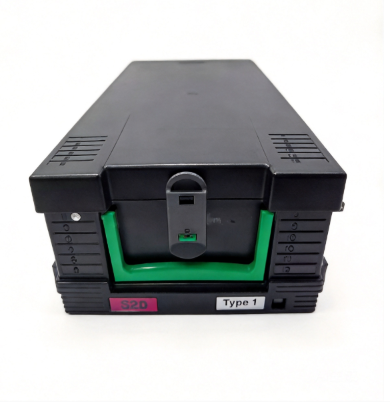
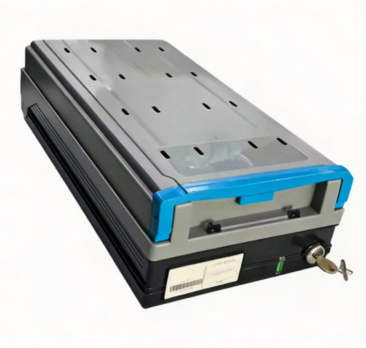
- S2 Cash Cassette — PN: 445-0756222
The S2 cash cassette is the primary note storage and feeding unit in SelfServ 30 and 60 series dispensers. It holds up to 2,500 notes and interfaces with the dispenser transport mechanism through a motorized pusher plate, belt-driven feed system, and optical sensor array. The cassette is removable — bank staff swap cassettes during cash replenishment cycles, so mechanical wear comes from both transaction cycles and handling.
Three sub-systems degrade over time. The pusher plate spring assembly loses tension after approximately 500,000 note cycles — the plate no longer maintains consistent pressure against the note stack, causing feed gaps and missed picks. The feed belt stretches: the S2 uses a toothed timing belt to drive the note feed roller, and as the rubber compound ages and reinforcement cords stretch, belt tension drops. Below minimum tension spec, the belt slips on the drive pulley, producing intermittent feed failures that are difficult to reproduce during bench testing. Then there’s sensor contamination — optical sensors in the cassette bay detect note presence, cassette seating, and end-of-cassette condition. Paper dust from worn banknotes accumulates on the sensor lenses over time. The contamination is gradual; sensors don’t fail suddenly, they become progressively less reliable, producing false “cassette empty” or “cassette not present” errors.
Symptoms you’ll see: frequent “CASSETTE JAM” or “NOTE FEED FAILURE” error codes, notes feeding inconsistently (works for 20 transactions then fails for 5), cassette intermittently not recognized by the SelfServ control system, and premature “CASSETTE EMPTY” warnings when 500+ notes remain.
Parts and replacement strategy:
S2 Cash Cassette (complete) — PN: 445-0756222 — replace as needed for housing damage Pusher Plate Kit — PN: 445-0758915 — every 500,000 cycles Feed Belt Assembly — PN: 445-0754406 — every 300,000 cycles or 24 months Sensor Array Cleaning Kit — service procedure, not a separate PN — every 10,000 cycles
One thing worth knowing: most “failed” S2 cassettes don’t need complete replacement. The aluminum housing is durable. The failure is almost always in the internal wear components. Rebuild the cassette with a fresh pusher plate kit and belt assembly rather than buying a complete new unit.
- Dispenser Control Board — PN: 445-0751703 / 445-0712895
The dispenser control board is the dedicated microcontroller board that manages all dispenser functions: motor control, sensor input processing, note counting, jam detection, and communication with the SelfServ main PC. The S1 series boards (445-0751703 and 445-0712895) are used in earlier SelfServ 30 models, while the S2 variant (445-0753776) covers later production units.
The primary failure mode is capacitor degradation in the power regulation section. NCR’s dispenser boards use a multi-rail power design: 5V for logic, 12V for motor drivers, and 3.3V for communication circuits. Each rail has dedicated electrolytic filtering capacitors. After 4-5 years of continuous power-on operation in a warm ATM cabinet (internal temperatures frequently reach 40-45°C), three things happen to these capacitors. First, electrolyte dry-out — the liquid electrolyte evaporates through the capacitor seal, reducing capacitance. Second, ESR increase — Equivalent Series Resistance rises as the electrolyte degrades, causing voltage ripple. Third, voltage rail instability — when ripple exceeds the tolerance of downstream regulators, the board’s power-on-reset circuit triggers, causing an unexpected reboot.
This failure is particularly frustrating for field technicians because it is intermittent. The board works for hours, then resets without warning, then works again. Standard diagnostic tools show “no fault found” because the failure is transient.
Symptoms: intermittent dispenser shutdown with no logged error code, dispenser resets mid-transaction, works normally after power cycle then fails again within 24-48 hours, and more frequent failures during hot weather (temperature-dependent capacitor behavior).
Parts and replacement strategy:
S1 Dispenser Control Board — PN: 445-0751703 — SelfServ 30 series (early production) S1 Dispenser Control Board (variant) — PN: 445-0712895 — SelfServ 30 series (mid-production) S2 Dispenser Control Board — PN: 445-0753776 — SelfServ 60 series
These boards are discontinued by NCR. Board-level repair (capacitor replacement) is possible for shops with SMD rework capability. For most service companies, keeping 1-2 tested replacement boards on the shelf is the practical solution.
- Estoril PC Core (Win10 Upgrade) — PN: 445-0764433
The PC Core is the main computer that runs the SelfServ operating system and application software. The Estoril platform (older) and later Win10-upgraded variants represent two generations of NCR’s purpose-built ATM computing hardware.
This isn’t a single-component failure — it’s a platform lifecycle issue. The legacy Estoril cores originally shipped with Windows XP Embedded. Microsoft ended XP support in 2014, and NCR stopped producing Estoril cores shortly after. Machines still running Estoril face three problems: OS obsolescence (banks cannot run unsupported operating systems on PCI-compliant payment devices), hardware failure (capacitors dry out, solder joints crack, hard drives fail — same aging issues as any 10+ year old computer), and no OEM replacement path (NCR no longer manufactures or supports Estoril boards).
The Win10 upgrade boards solved the OS compatibility problem but created a new sourcing challenge after the NCR Atleos spinoff in 2023. Parts that previously shipped from NCR’s Kansas warehouse in 3-5 business days now have lead times measured in weeks, with higher minimum order quantities.
Symptoms: random system reboots, operating system corruption (boot failures, blue screens), USB controller failures causing peripheral disconnects, intermittent card reader or PIN pad failures (these peripherals connect through the PC Core’s USB hub), and extended boot times or failure to complete POST (Power-On Self-Test).
Parts and replacement strategy:
Estoril PC Core (EOL) — PN: 445-0752091 — SelfServ 30 series (legacy) Estoril PC Core (Win10 Upgrade) — PN: 445-0764433 — SelfServ 60/80 series SelfServ Motherboard — PN: 445-0770712 — SelfServ 80 series
This is the most expensive single component in the SelfServ platform. When sourcing replacement PC Cores, insist on tested units — a board that “powers on” is not the same as a board that passes a full SelfServ firmware validation. The USB subsystem, network controller, and SATA interface must all be verified before installation.
- Receipt Printer Cutter — PN: 998-0911396
The receipt printer cutter is a guillotine-style blade mechanism that cuts each receipt from the continuous paper roll after printing. In NCR SelfServ machines, the printer and cutter form a single module, but the cutter is a replaceable sub-assembly.
This is purely mechanical wear. The cutter operates on a cam-driven blade mechanism: the printer feeds paper through the print head, a DC motor drives a cam that pushes the fixed blade against a moving blade, the paper is sheared between the two blades, and a spring returns the mechanism to the open position.
After approximately 10,000 cut cycles, the blade edges dull. Instead of a clean shear, the paper tears. The torn edge creates a paper fragment that jams in the presenter throat, the jam sensor triggers, and the machine reports “RECEIPT PRINTER FAULT.” Duty cycle matters: a busy ATM in a retail location might do 300-400 transactions per day, hitting 10,000 cycles in under a year. A quiet branch machine might take 3 years to reach the same wear point.
Symptoms: paper tears instead of cutting clean, jam errors immediately after printing, customer receives torn or partial receipt, and cutter noise changes from a clean “snip” to a grinding sound.
Parts and replacement strategy:
Receipt Printer Cutter Assembly — PN: 998-0911396 — SelfServ 22/25/34
Note: 009-0027569 is not a cutter. It is a complete receipt printer assembly — the whole printer, not the cutting mechanism — so order it only when the entire printer needs replacing, not when the blade alone is worn.
You don’t need to replace the entire receipt printer. The cutter is a modular sub-assembly — 2 screws, 1 connector, under 10 minutes to swap. Service manuals often don’t call this out at the sub-assembly level, leading to unnecessary full-printer replacements.
- S2 Pick Module — PN: 445-0756286
The pick module is the precision rubber-roller mechanism that separates and feeds individual notes from the cassette stack into the transport path. It uses a combination of a feed roller, a separation roller, and a double-detect sensor to ensure exactly one note enters the transport per pick cycle.
Rubber roller hardening is the primary failure mode. The pick rollers are made of EPDM (ethylene propylene diene monomer) rubber, selected for its friction characteristics against paper currency. Over time, the rubber compound hardens (plasticizers migrate out, increasing Shore hardness from approximately 40A new to 60A+ aged), glazes (the roller surface becomes smooth and shiny instead of matte and textured), and loses friction coefficient (static friction against paper drops below the threshold needed for reliable single-note separation).
When friction drops, the roller either fails to pick a note (missed pick) or picks multiple notes simultaneously (double pick). Both conditions trigger the dispenser’s note-counting sensors and result in a transaction failure. Humidity is the dominant accelerator — machines in Southeast Asia and the Middle East (ambient humidity 60-80%) show pick module degradation 30-40% faster than units in climate-controlled European bank lobbies (ambient humidity 30-50%).
Symptoms: double-pick errors (multiple notes fed simultaneously), missed pick errors (no note fed), intermittent jam errors in the transport path, and inconsistent performance that worsens in humid conditions.
The pick module is modular — designed for quick swap. For fleets of 50+ machines, stock 2-3 complete modules and rotate them: remove failed module, install fresh one, send failed one for roller rebuild. This keeps downtime under 30 minutes per incident.
S2 Pick Module (complete) — PN: 445-0756286 — SelfServ 30/60 series Pick Roller Kit — rebuild existing module, no separate PN listed
Failure pattern analysis
Looking at these five components together, three distinct failure categories emerge. Mechanical wear (cassette, cutter, pick module) — driven by friction, material fatigue, and environmental exposure — is highly predictable with cycle-based replacement intervals. Electronic degradation (dispenser control board) — driven by capacitor aging and thermal stress — is moderately predictable with a 4-5 year life cycle in typical conditions. Platform obsolescence (Estoril PC Core) — driven by OEM end-of-life and OS migration requirements — is fully predictable with known EOL dates.
The pattern is clear: NCR SelfServ failures are not random. They follow predictable life cycles. The difference between service companies that maintain 98% uptime and those struggling at 85% is spare parts inventory management — having the right parts on the shelf before the failure occurs.
Atleos spinoff impact on parts supply
In October 2023, NCR Corporation split into two separate companies: NCR Voyix (digital commerce) and NCR Atleos (ATM hardware and services). The ATM parts supply chain moved to Atleos. What changed for field service companies: lead times went from 3-5 business days from NCR’s US distribution centers to commonly 2-4 weeks for non-stock items. Minimum order quantities increased across most part categories. Legacy Personas and early SelfServ parts were formally discontinued, with no alternative offered through Atleos channels. Regional availability shifted — parts previously stocked in regional depots are now centralized, increasing shipping times to non-US markets.
For service companies outside North America — particularly in Europe, the Middle East, Africa, and Southeast Asia — building a third-party parts supply chain has become a business necessity, not a cost-saving exercise.
Sourcing strategy for NCR SelfServ parts
Based on the failure patterns and supply chain changes, here’s a practical approach:
Tier 1 — Always in Stock (replace within hours, not days): S2 Pick Module (445-0756286) at 1 per 25 machines in fleet, Receipt Printer Cutter (998-0911396) at 1 per 50 machines, Pusher Plate Kits (445-0758915) at 2 per 50 cassettes.
Tier 2 — Available Within 24 Hours (critical but lower failure frequency): Dispenser Control Board (445-0751703) at 1 per 100 machines, S2 Cash Cassette (445-0756222) at 1 per 50 machines for housing-damage scenarios.
Tier 3 — Planned Replacement (scheduled upgrades, not emergency repairs): Estoril PC Core Win10 Upgrade (445-0764433) — order per upgrade project.
About MicroLinkpro
MicroLinkpro supplies NCR SelfServ-compatible ATM parts manufactured in our own facilities in South China. Our production processes align with ISO 9001-certified manufacturing practices with CNC machining, injection molding, PCB assembly, and dedicated NCR SelfServ test benches running actual SelfServ firmware. Our inventory covers NCR SelfServ 22/25, 30/34/38, 60/66, and 80/84 series, plus legacy Personas models. For discontinued NCR parts, our reverse-engineering capability restarts production when OEM supply ends.
For NCR parts inquiries, contact linda.zhou@microlinkpro.com or WhatsApp +852 93572135.
FAQ
Q1. What is the part number of the S2 cash cassette?
445-0756222. It is the primary note storage and feeding unit in SelfServ 30 and 60 series dispensers and holds up to 2,500 notes.
Q2. Do I have to replace a whole S2 cassette when it fails?
Usually not. The aluminum housing is durable and the failure is almost always in the internal wear components, so rebuild the cassette with a fresh pusher plate kit and belt assembly instead of buying a complete new unit.
Q3. What S2 wear parts should be on the shelf, and when?
Pusher Plate Kit PN 445-0758915 every 500,000 cycles, and Feed Belt Assembly PN 445-0754406 every 300,000 cycles or 24 months. The sensor array clean is a service procedure with no separate PN, done every 10,000 cycles.
Q4. Why does my dispenser reset mid-transaction with no error code?
Capacitor degradation on the dispenser control board. Electrolyte dry-out and rising ESR make the voltage rail unstable until the board's power-on-reset circuit triggers, which is why standard diagnostics report no fault found. The S1 boards are 445-0751703 and 445-0712895 for SelfServ 30, and the S2 board is 445-0753776 for SelfServ 60. They are discontinued by NCR, so keeping 1-2 tested replacement boards is the practical fix.
Q5. Which receipt printer cutter fits SelfServ 22/25/34?
PN 998-0911396. Note that 009-0027569 is not a cutter — it is a complete receipt printer assembly, so order it only when the entire printer needs replacing. The blade dulls after roughly 10,000 cut cycles and the paper then tears instead of shearing - a busy retail machine doing 300-400 transactions per day gets there in under a year. It is a sub-assembly swap: 2 screws, 1 connector, under 10 minutes.
Q6. What causes double picks and missed picks on a SelfServ pick module?
Rubber roller hardening. The EPDM pick rollers glaze and lose friction, so the module either feeds no note or feeds several - Shore hardness climbs from about 40A new to 60A+ aged. Humidity is the main accelerator: units running at 60-80% ambient humidity degrade 30-40% faster than ones in climate-controlled lobbies at 30-50%. The module is 445-0756286 for SelfServ 30/60.
Q7. Is the Estoril PC Core still supported?
No. Legacy Estoril cores shipped with Windows XP Embedded, Microsoft ended XP support in 2014 and NCR stopped producing Estoril cores shortly after. The EOL board is PN 445-0752091, the Win10 upgrade PN 445-0764433 for SelfServ 60/80, and the SelfServ Motherboard is 445-0770712 for the 80 series. Insist on tested units - the USB subsystem, network controller and SATA interface must all be verified.
Q8. How many spare pick modules should I keep for a big fleet?
For fleets of 50+ machines, stock 2-3 complete modules and rotate them - remove the failed module, fit a fresh one, send the old one for roller rebuild, which keeps downtime under 30 minutes per incident. The Tier 1 stocking target is 1 pick module per 25 machines and 1 receipt printer cutter per 50 machines.
Last updated: July 2026. Part numbers verified against NCR SelfServ documentation. Always confirm compatibility with your specific machine configuration before ordering.
Browse our full range of NCR ATM Parts — 10,000+ SKUs in stock. For pricing and availability, contact linda.zhou@microlinkpro.com or WhatsApp +852 93572135.
MicroLinkpro Technical Team — ATM parts engineering group, Guangzhou, South China.
Technical Review: CTO with 23 years of ATM OEM field service and component-level diagnostic experience across NCR, Diebold, Wincor, and Hyosung platforms.
Last updated: August 2026.