Most ATM fleets are mixed. A bank might run NCR SelfServ 25s in the lobby, Diebold Opteva 7xx units through the wall, and Hyosung NH-2700s at off-site locations. Each brand has its own dispenser architecture, its own part numbers, and its own failure patterns.
The maintenance challenge isn’t fixing one machine. It’s managing spare parts across three or four incompatible product lines without tying up too much capital in inventory — or running out of the one part that takes a machine offline.
Here’s how to build a multi-brand parts strategy that keeps machines running without breaking the maintenance budget.
The Real Cost of a Down ATM
Before talking about parts, let’s talk about what downtime actually costs.
A single ATM in a high-traffic location processes 200 to 400 transactions per day. If that machine goes down waiting for a part, the costs stack up:
- Lost transaction fees — every transaction that moves to a competitor
- Customer dissatisfaction — the ATM is often the only banking touchpoint
- Cash logistics disruption — armored couriers arrive to find a dead machine
- Technician callback — the same machine visited twice because the right part wasn’t on the truck
The most expensive part is the one you don’t have. The second most expensive is the one you stock but never use. Good inventory management balances both.
Step 1: Know Your Fleet
Before ordering a single spare part, document what you actually have:
| Data Point | Why It Matters |
|---|---|
| Brand + model | Determines which dispenser generation you have |
| Serial number | Needed for production-date-specific parts |
| Installation date | Age predicts which components are due for failure |
| Transaction volume | High-traffic machines wear parts 3x faster |
| Environment | Outdoor/humid locations accelerate degradation |
| Service history | Recurring issues on one machine point to systemic problems |
One bank we worked with discovered that 40% of their service calls came from just 15% of their machines — the ones in coastal locations where salt air was corroding connectors. They didn’t need more spare parts. They needed different parts for those specific locations.
Step 2: Build Your Critical Parts List by Brand
Every ATM brand has a different failure profile. Here’s what to stock for the three most common fleets:
NCR SelfServ Fleet (22/24/25/27)
| Priority | Part | Reason |
|---|---|---|
| 1 | SDD Pick Module | Highest failure rate across all SelfServ models |
| 2 | Transport Belt Set | Wear item, predictable replacement interval |
| 3 | Receipt Printer Assembly | Customer-visible failure, frequent service calls |
| 4 | PSU | Capacitor aging, takes mainboard with it |
| 5 | Card Reader Assembly | EMV-critical, long lead time from OEM |
Diebold Opteva Fleet (3xx/4xx/5xx + 7xx)
| Priority | Part | Reason |
|---|---|---|
| 1 | AFD Picker Module | Different PN for AFD 1.5 vs 2.0 — stock both if mixed fleet |
| 2 | Presenter Shutter Assembly | DR01:3A:33:41 is the most common fatal error |
| 3 | Transport Belts | Stretch over time, cause intermittent jams |
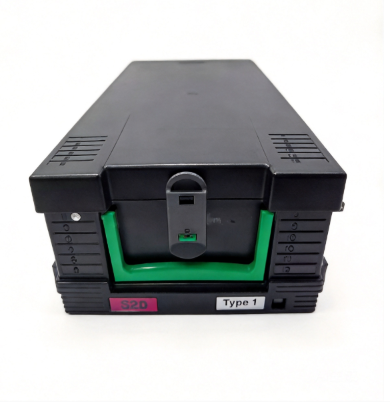
| 4 | Reject Cassette (00000751000A) | Consumable — when full, machine stops |
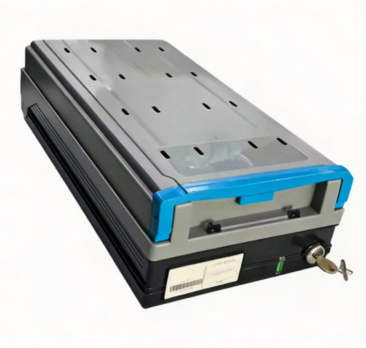
| 5 | Cash Cassettes | Physical damage from courier handling |
Wincor ProCash Fleet (CMD-V4)
| Priority | Part | Reason |
|---|---|---|
| 1 | Pick Roller Assembly | Rubber degradation, 500K cycle life |
| 2 | Transport Belt Set | 1M cycle replacement interval |
| 3 | FSM Cash Cassette | Pusher plate spring fatigue |
| 4 | Presenter Shutter Motor | Gear wear after 300K cycles |
| 5 | Photoelectric Sensors | Dust contamination — cheap, easy to swap |
Step 3: OEM vs. Aftermarket — A Decision Framework
Not all parts need to come from the manufacturer. Here’s the decision matrix:
| If the part is… | And… | Then… |
|---|---|---|
| Mechanical wear item | Available from quality aftermarket | Buy aftermarket, save 40-60% |
| Electronic assembly with firmware | Machine is under 5 years old | Buy OEM, firmware compatibility is everything |
| Electronic assembly with firmware | Machine is 8+ years, OEM discontinued | Buy professionally remanufactured |
| Security module (EPP, encryptor) | Any age | OEM only, no exceptions |
| Consumable (belts, rollers, cassettes) | Any age | Aftermarket is fine if properly spec’d |
| Proprietary connector/cable | Any age | OEM — aftermarket pinouts are unreliable |
The sweet spot: stock OEM for the 20% of parts that cause 80% of catastrophic failures, and aftermarket for everything else.
Step 4: The EOL Problem — What to Do When the Manufacturer Stops Supplying
Every ATM model eventually reaches end-of-life. NCR stopped manufacturing SelfServ 22 parts around 2019-2020. Diebold AFD 1.5 parts are increasingly scarce. Hyosung NH-1800 parts are discontinued.
When OEM supply dries up, you have three paths:
Warehouse stock — Some suppliers maintain inventories of discontinued OEM parts. Available while stock lasts, but prices rise as supply shrinks.
Professional remanufacturing — For electronic boards and mechanical assemblies, specialized manufacturers reverse-engineer and produce compatible replacements. This is the only sustainable path for fleets with 3+ years of remaining service life.
Machine retirement — If the fleet is small and machines are due for replacement anyway, accelerated retirement may be cheaper than chasing discontinued parts.
The key: don’t wait until the part fails to figure out where to get it. Audit your fleet’s EOL exposure annually.
Step 5: Smart Stocking — How Much Is Enough?
A simple formula for each part type:
Stock Level = (Fleet Size × Annual Failure Rate × Lead Time in Weeks) ÷ 52
Example: You have 50 NCR SelfServ machines. The SDD pick module fails at roughly 15% per year. Lead time from your supplier is 2 weeks.
Stock = (50 × 0.15 × 2) ÷ 52 = 0.29 → round up to 1
Sounds low? It is. That’s the minimum. Add 50% buffer for high-traffic sites. Final number: stock 2.
For high-failure parts across a large fleet:
| Fleet Size | Pick Modules | Belt Sets | PSUs | Receipt Printers |
|---|---|---|---|---|
| 10 | 1 | 2 | 0 | 1 |
| 25 | 2 | 4 | 1 | 2 |
| 50 | 3 | 6 | 2 | 3 |
| 100 | 5 | 10 | 3 | 5 |
These numbers assume mixed-brand fleets. Pure NCR or pure Diebold fleets can consolidate.
The Bottom Line
Multi-brand fleets are a procurement challenge, but they’re also the reality for most banks and independent ATM operators. The goal isn’t to eliminate complexity — it’s to manage it with a clear stocking strategy, a defined OEM-vs-aftermarket policy, and an annual EOL audit.
The operators who get this right don’t just save on parts. They save on the cost that doesn’t show up in any invoice: machines sitting idle while a $50 part is somewhere in transit.
Need help building a parts stocking plan for your fleet? Our technical team works with ATM operators across 30+ countries.
FAQ
Q1. What is the highest-failure part on an NCR SelfServ?
The SDD Pick Module. It tops the critical parts list for the SelfServ 22/24/25/27 fleet, ahead of transport belt sets, receipt printer assemblies, PSUs and card reader assemblies.
Q2. Which Diebold Opteva error code shows up most?
DR01:3A:33:41. It is the most common fatal error on Opteva machines and points to the presenter shutter assembly, the number two part on the Opteva critical list.
Q3. Do AFD 1.5 and AFD 2.0 pickers use the same part number?
No. The Diebold AFD Picker Module carries a different PN for AFD 1.5 vs 2.0, so if your fleet is mixed you have to stock both.
Q4. How long does a Wincor CMD-V4 pick roller last?
Its rated life is 500K cycles, and it usually dies from rubber degradation. On the same ProCash CMD-V4 dispenser the transport belt set is a 1M cycle replacement interval and the presenter shutter motor shows gear wear after 300K cycles.
Q5. Can I buy aftermarket for an EPP or encryptor?
No. Security modules such as the EPP and the encryptor are OEM only, no exceptions, at any machine age.
Q6. How much do aftermarket mechanical parts actually save?
40-60%. Mechanical wear items available from a quality aftermarket source are the clear case for buying aftermarket, and consumables like belts, rollers and cassettes are fine aftermarket if they are properly spec'd. Proprietary connectors and cables are not - aftermarket pinouts are unreliable.
Q7. What is the spare parts stocking formula?
Stock Level = (Fleet Size x Annual Failure Rate x Lead Time in Weeks) / 52. For 50 SelfServ machines with a 15% per year SDD pick module failure rate and a 2 week lead time that gives 0.29, rounded up to 1 as the minimum, then add a 50% buffer for high-traffic sites for a final number of 2.
Q8. When should I retire machines instead of chasing parts?
When OEM supply dries up - NCR stopped manufacturing SelfServ 22 parts around 2019-2020, Diebold AFD 1.5 parts are increasingly scarce and Hyosung NH-1800 parts are discontinued. If the fleet is small and the machines are due for replacement anyway, accelerated retirement may be cheaper. Professional remanufacturing is the only sustainable path for fleets with 3+ years of remaining service life, and warehouse stock only lasts while stock lasts.
📧 linda.zhou@microlinkpro.com | 🌐 microlinkpro.com | 💬 WhatsApp: +852 93572135
Browse our full range of ATM Parts Catalog — 10,000+ SKUs in stock. For pricing and availability, contact linda.zhou@microlinkpro.com or WhatsApp +852 93572135.
MicroLinkpro Technical Team - ATM parts engineering group, Guangzhou, South China.
Technical Review: CTO with 23 years of ATM OEM field service and component-level diagnostic experience across NCR, Diebold, Wincor, and Hyosung platforms.
Last updated: August 2026.